

No audio available for this content.
A new study based on GPS measurements of the Earth’s crust suggests the Greenland ice sheet is melting 7 percent faster than previously believed and may contribute more to future sea level rise than predicted, reports the Canadian Broadcasting Corporation.
“We’ve underestimated the rate of ice loss by about 7.6 percent,” says Michael Bevis of The Ohio State University, one of the study’s co-authors.
The research found that Greenland lost close to 2,700 gigatons of ice from 2003–2013, rather than the 2,500 gigatons figure that scientists previously believed. The study, published in the journal Science Advances, is an international effort that started in 2007, with contributions from the U.S., Denmark and Luxembourg.
Over the past two decades the Greenland ice sheet has been shrinking — partly due to accelerated glacier flow and partly because of surface melt. However, scientists have not been able to pinpoint exactly how much the melting ice sheet is contributing to global sea level rise — information key to making predictions about future sea rise levels. Part of the challenge has been a lack of on-site data.
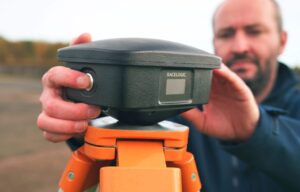
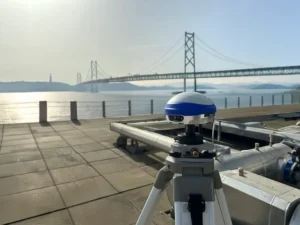
For this study teams of scientists spent years installing GPS devices around the perimeter of the Greenland ice sheet to collect new data. The team discovered that the hotspot in the Earth’s mantle that feeds Iceland’s active volcanoes has been distorting data.














William K.
Given that the oceans are fairly fluid it would seem that the amount of ocean level rise so far ought to be measurable, if they have a fine enough calibrated micrometer. The math ought to be straightforward, given that 2700 gigatons of ice would be a volume of water that could be calculated. Then, once the volume of water is calculated, divide that by the surface area of the oceans. That will provide an answer as to how much the ocean level has risen. Of course, determining the correct number of the surface area of the world’s oceans will be a bigger challenge than measuring all of that ice that melted. OR, was that number just a SWAG?
Thomas Kausek
Spacecraft are used to very precisely measure the sea surface height. Topex Poseidon for a number of years and then Jason 1 and Jason 2 provide knowledge to a few millimeters change in sea surface height and a centimeter or two for height value. A precice radar altimeter is used with a radiometer to extract out the effect of humidity through which the radar pulse pass through. IceSat is measuring via laser pules, the ice packs height. So, continuous precision information is being obtained on sea surface height and ice pack height.
David Kerr
Isn’t it true that the sea surface rise in height has been consistently measured at 3 mm a year for the past 120 years (verified by Topex Poseidon and Jason 1 and Jason 2)? Why is this subject treated so ambiguously? Is it for a Political correct agenda and/or business development funding?