No audio available for this content.
News courtesy of CANSPACE Listserv.
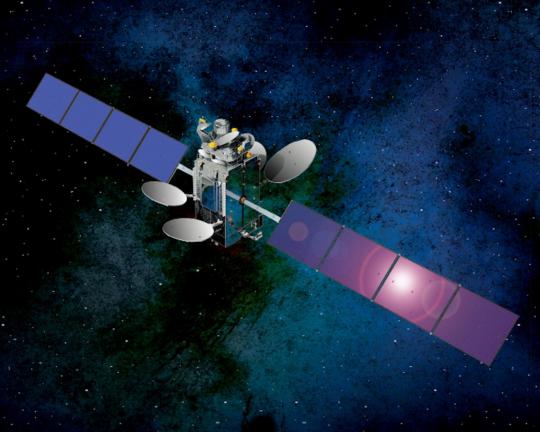
The SES-5 geostationary communications satellite (also known as Sirius 5 and Astra 4B) was launched from the Baikonur Cosmodrome on July 9 at precisely 18:38:29.994 UTC. After a number of manoeuvres by the various rocket stages, the satellite was released from the Breeze-M upper stage into its geostationary transfer orbit (GTO) at 03:50:15.150 UTC on July 10.
The planned GTO has a perigee height of 4,170 km, an apogee height of 35,786 km, and an orbital inclination of 23.1 degrees. The satellite’s apogee-kick motor should place the satellite into its geostationary Earth orbit (GEO) within the next few days. The GEO sub-satellite point will be at 5 degrees east longitude.
SES-5 hosts a dual-frequency transponder for the European Geostationary Navigation Overlay Service (EGNOS). The pseudorandom noise codes to be used by the satellite are not yet known.
“SES-5 is an important addition to our fleet serving both our commercial and government customer with our first L-band payload for EGNOS to augment the GPS system for Europe. This is a great accomplishment by all of the teams who worked on the SES-5 mission — SES, ILS, Khrunichev, and Space Systems/Loral — and we thank them for their dedicated work on the successful launch,” said SES President and CEO, Romain Bausch.