Listen to this content
On Nov. 11, the chair of the Z-Wave Alliance, Avi Rosenthal, published an opinion piece in GPS World, urging a delay in addressing one of America’s most pressing national security and economic vulnerabilities. I am talking about the need for a terrestrial complement to GPS. By ignoring both the urgency of the threat and the strength of the engineering analysis supporting near-term solutions like 5G-powered 3D PNT, Mr. Rosenthal argues the U.S. can afford to wait. At NextNav, we strongly disagree.
Around the world, GPS disruptions are no longer hypothetical. As this publication has documented, incidents of GPS jamming and spoofing have become routine in places like the Middle East and the Baltic states. And the increasing severity of these disruptions is spilling over into civilian life, putting us all at risk. We’ve seen the consequences here at home, too. Major airports have experienced manmade GPS disruptions of unknown origin, and farmers have seen how even temporary GPS loss can upend precision agriculture.
Whether caused by jamming, spoofing or natural disasters, the vulnerabilities are real and growing.
These threats are why the Federal Communications Commission (FCC) made it a priority to advance additional technologies and solutions as part of a whole-of-government approach to strengthen PNT resiliency. At NextNav, we are doing the hard work necessary to help enable a system-of-systems capable of delivering greater PNT resilience into America’s critical infrastructure, while Mr. Rosenthal and his allies continue to rely on flawed studies and broad mischaracterizations of our proposal. They preach delay rather than moving to the logical next step of the FCC process, specifically designed to allow the commission to fully evaluate competing technical claims.
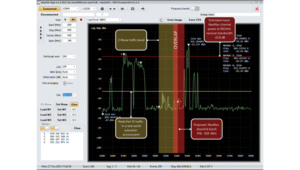
We have filed multiple comprehensive engineering studies demonstrating that 5G operations in the lower 900 MHz band will not cause unacceptable interference to unlicensed devices. Those studies specifically examined five different unlicensed technologies, including the Z-Wave technology. To ensure this discussion is fact-based, we’d like to set the record straight.
The SIA-sponsored paper that Mr. Rosenthal cited for his unrealistic claims of interference does not hold up under scrutiny and contains a number of fundamental technical errors. As we’ve outlined in detail, NextNav’s detailed technical analysis has identified significant flaws in the Pericle paper, pointing out fundamental errors in the paper’s assumptions and methodology.
For instance, Pericle’s predicted 5G emission levels exceed levels found in theoretical free-space conditions — an impossibility that undermines the entire paper. The Pericle paper also seems to ignore how 5G positioning signals work, failing to mention comb patterns and muting that are core to the technology, and thereby further inflating perceived 5G emission levels. Attempts to reproduce Pericle’s simulations with Pericle’s stated methods and parameters yield dramatically different results, which serve as clear evidence of computational errors or faulty execution of the depicted scenario.
Perhaps most remarkably, no credible analysis could replicate Pericle’s conclusion that 5G interference would occur more than 50 percent of the time when the ostensibly interfering transmitter operates only 50 percent of the time.
The most glaring issue with the paper that Rosenthal cites is that it never directly analyzes the very devices that the security industry states are predominant in home and business security systems today. Specifically, it fails to analyze Z-Wave, the technology that, according to the Z-Wave Alliance, is utilized by more than 90% of professionally monitored security systems in North America. In fact, Z-Wave operates primarily on frequencies that are outside of the frequencies which NextNav’s proposes to use for 5G.
It is a fact that unlicensed lower 900 MHz devices today successfully coexist with a wide range of unlicensed users that operate without coordination or interference protection. Pericle never accounts for the resilience mechanisms Part 15 devices use every day, including frequency hopping, bursty transmissions, adaptive modulation, redundant paths (meshing), self-healing and other features.
Lastly, Mr. Rosenthal’s characterization of the Department of Transportation’s action also fails to mention that the DOT has already evaluated NextNav’s technology, ranking NextNav first in every category of its 2021 evaluation. In 2024, DOT awarded NextNav the largest grant, $1.8M, for Rapid Phase I field testing of PNT technologies. NextNav supports DOT’s ongoing work to advance complements to GPS, but its testing should not stand in the way of swiftly advancing solutions that are ripe for action now.
Waiting for DOT to conclude its testing of multiple additional PNT technologies before the commission acts within its authority to take the next step towards enabling one or more potential solutions not only runs contrary to a Presidential Executive Order for agencies to remove barriers to private sector investment, but also risks the same analysis paralysis that slowed deployment of resilient PNT in the previous administration.
At NextNav, we are serious about solving an urgent national security problem, and we will continue to do the hard work necessary to support the FCC’s engineering-driven decision making. The FCC is the expert authority on commercial spectrum issues, and we believe it has all of the information it needs to take the next step in this process by issuing a Notice of Proposed Rulemaking (NPRM). Issuing an NPRM would also give the FCC the opportunity to ask any remaining technical or economic questions that it may deem necessary to complete its evaluation.
It’s time to roll up our sleeves and do the hard work necessary to enable a system-of-systems approach to building great PNT resilience. The longer we delay, the more vulnerable we become.
Renee Gregory is the vice president of regulatory affairs at NextNav.